What prompted the redesign?
Despite its potential, the Lincoln Level Advantage tool was struggling with a low click rate among its target audience.
Project goals
Recognizing the urgency, the project's focal point was to dissect the user journey, uncovering potential stumbling blocks hindering user interaction.
About the experience
Accessible through a public link, the Lincoln Level Advantage tool serves both financial professionals and annuities clients. Users access the tool via
the Lincoln Level Advantage Suite or through targeted social media campaigns.
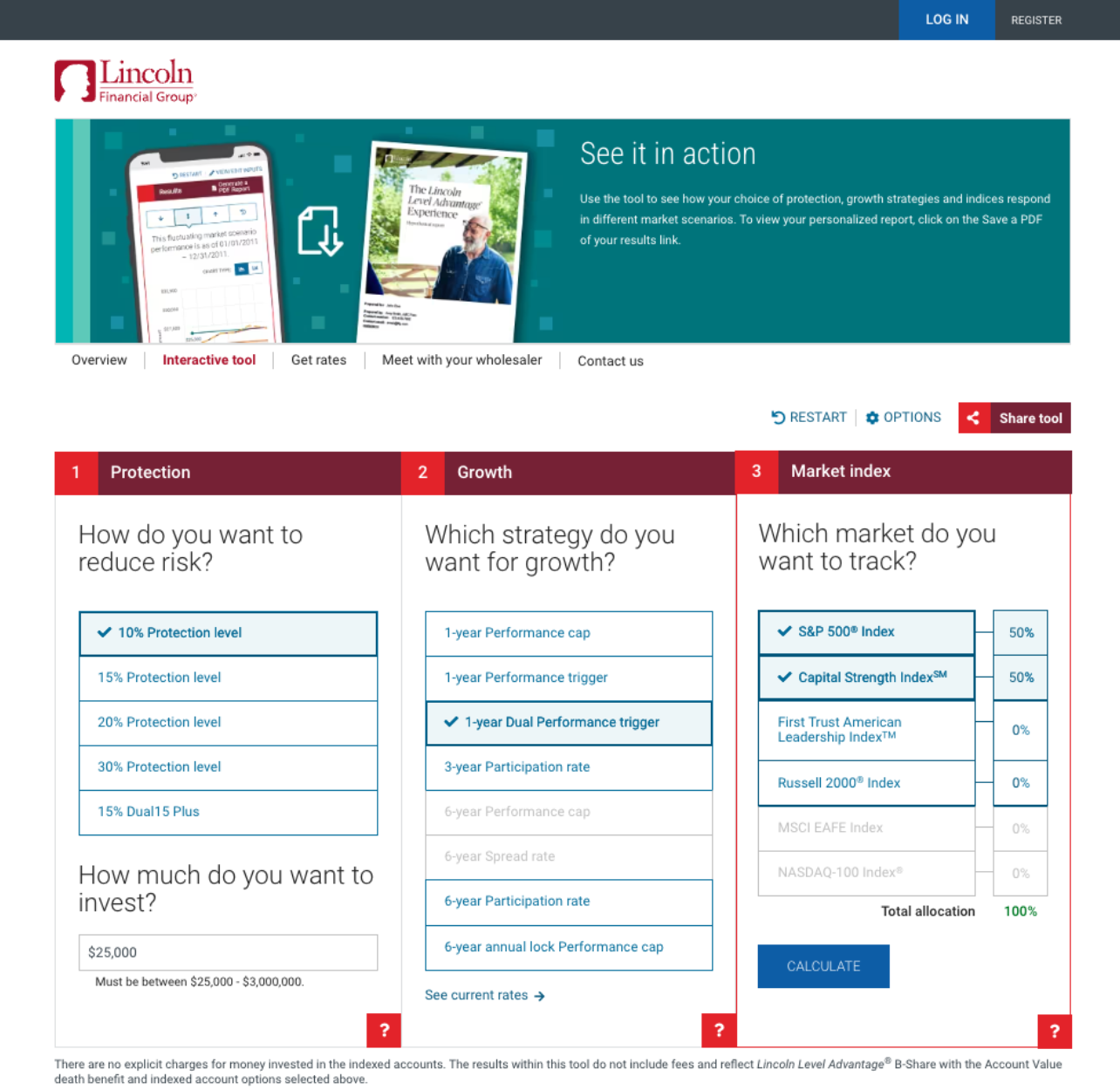
The tool presents users with a series of steps, guiding them through selections and ultimately prompting them to click "calculate." However, usability tests unveiled significant hurdles from the onset, users were often perplexed by the limitation of choosing only one crediting strategy in Step 1. Frustrations persisted into subsequent steps, where users expected instant results upon selection. In response, I meticulously charted user touchpoints, unraveling the journey's pain points.
View user touchpoints.Navigating through challenges
Initially, stakeholders proposed a quick fix, a simple arrow pointing to the "calculate" button. However, after a 60-day trial, it became evident that this did not address the fundamental flow issue. Armed with user testing data, I identified key pain points leading to a more effective solution.
Crafting solutions rooted in user insights
Addressing user pain points, the following changes were implemented:- Help text integration: I strategically placed guidance throughout eah step, ensuring users felt supported and informed- CTA refinement: Recognizing the importance of clear direction, I replaced the generic "Calculate" button with the more enticing "See My Results."
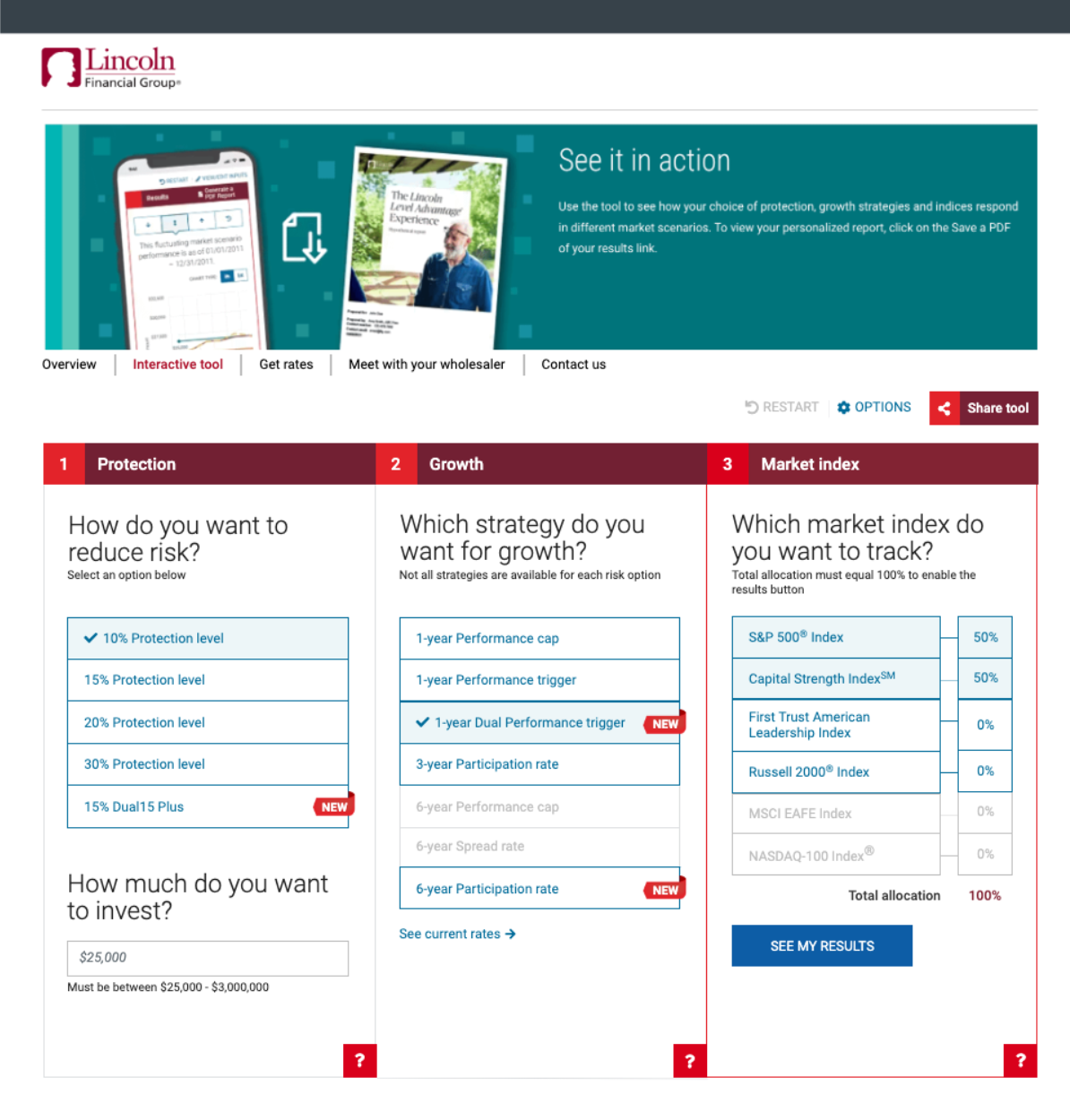
150% increase in user engagement
Upon launching these enhancements in our pre-production environment and subjecting them to rigorous user testing, the results were nothing short of astounding, a staggering 150% increase in user engagement. Users not only grasped the tool's flow more intuitively but also reported a smoother, more gratifying experience.

.png)